
Why I Almost Canceled May’s Monthly Reset (But Didn’t)
There’s something that happens when we go through major life changes.
Something has to give.
Maybe the way we eat shifts. Maybe our routines disappear. Maybe the things that normally help us feel grounded suddenly feel impossible to maintain because we just don’t have the brain space, energy, or emotional capacity to hold everything at once.
Especially when the thing we’re trying to hold is new.
That’s where I found myself this month.
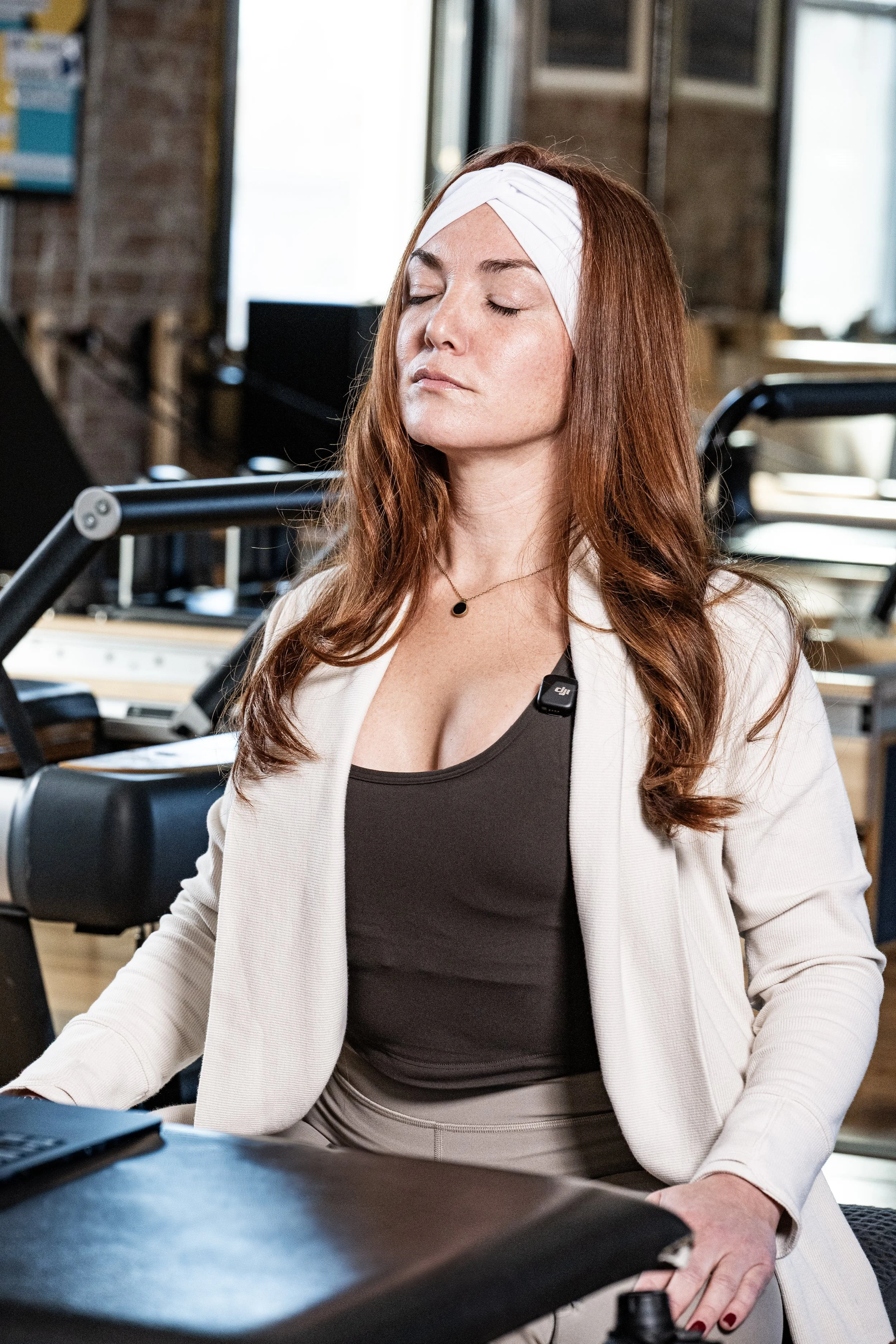
At Nimble Up, we’d been running our Monthly Reset for four months. It’s still a relatively new offering for us, and in May I decided to make another change: hosting it in person for the first time.
I was excited about that shift because I genuinely love being around people. I wanted to feel the energy in the room. I wanted to see what changed when people experienced the Reset side-by-side instead of through a screen.
But May also happened to be the month I’m getting ready to move to a new state.
That’s a lot!
I’m leaving Denver, Colorado, a place I’ve called home for 12 years, and moving to Grapevine, Texas. That means selling things, packing, wrapping up current client work, saying goodbye to familiar places, and preparing for a completely different chapter of life.
And if you’ve ever studied change psychology, you know moving is considered one of the biggest life stressors we experience. Even joyful change still requires our brains and bodies to adapt.
So there I was:
Moving states
Launching a new format for a new offering
Traveling to Iowa to visit my parents
And hosting the Reset in a Pilates studio I’d never even been to before
It would have been incredibly easy to say: “Not this month. We’ll try again later. I’ll do an in-person version once I’m settled.”
Honestly, I almost did just that.
But here’s what I’ve learned over the years about stress and change:
When we’re overwhelmed, we often pull away from the very things and people that could support us most. We isolate. We cancel. We simplify by eliminating.
And sometimes that’s appropriate. Sometimes rest is the answer.
But sometimes the answer is to lean in.
Instead of canceling the Monthly Reset, I asked for help. Thankfully, this event was happening at my mom’s Pilates studio, and she already had trusted relationships there. One of the instructors had attended a previous Reset virtually, so she already understood the experience.
That instructor helped explain the Reset to the studio owner. My mom helped coordinate logistics and payment processes. I copied over the materials we already had and adapted only the parts that needed to change.
And that’s the lesson I keep coming back to:
When life feels overwhelming, don’t abandon your systems. Return to them.

Under stress, our brains crave familiarity. That’s why standard operating procedures, routines, templates, and repeatable systems matter so much. They reduce cognitive load during seasons when our emotional bandwidth is already stretched thin.
I already had marketing copy, a structure for the virtual Reset, and knew the purpose and flow of the experience I wanted to create for attendees.
The only thing that was truly new was the in-person delivery format.
So instead of rebuilding everything from scratch, I leaned on what already worked and sought support for the parts that didn’t yet exist.
That support looked like:
Leveraging my mom’s relationships and organizational help
Leaning on someone who had already experienced the Reset
Talking through the in-person experience with my partner Roberto, who had been in the room with me before during previous months and could help me think through adjustments
There’s a misconception that resilience means doing everything alone. It doesn’t. Resilience can look like asking for support, simplifying, trusting your existing systems, and allowing other people to help carry the load.
So if you’re in a season of transition right now, I’d like to remind you that you don’t have to figure out every part of the next chapter by yourself.
Lean on what already works and the people who know you. And if you need to, adjust the process instead of abandoning the goal.