

The Eighth Dimension: Financial Wellbeing at Work
Money can be one of the biggest sources of stress for individuals, families, and organizations. If someone is experiencing financial strain, it doesn’t just stay at home. It can show up in focus, energy, and productivity at work. That’s why financial wellbeing is the final, but equally essential, dimension of the wellbeing framework.
At Nimble Up, we define wellbeing across 8 interconnected dimensions: emotional, physical, social, intellectual, spiritual, environmental, occupational, and financial. Financial wellbeing creates stability so people can bring their best selves to work without being weighed down by constant stress or uncertainty.

The Power of Resilient Teams
Why do I focus on resilience or the ability to bounce back after a stressful situation? And why specifically do I like to focus on a team’s ability to bounce back?
After working in corporate America for decades as a project and change manager, one thing I’ve seen is a whole lot of stressed out teams. If you think about what a project manager does, it’s all about coordinating, organizing and helping the team understand the mission to get stuff done.

The Seventh Dimension: Occupational Wellbeing at Work
Work is a huge part of life, and when it feels meaningful, it can lift every other area of wellbeing. When it feels misaligned or draining, it can take a toll far beyond the office. That’s why occupational wellbeing—the sense of purpose, growth, and satisfaction we experience through our work—is such an important dimension for leaders and teams to understand.
At Nimble Up, we define wellbeing across 8 interconnected dimensions: emotional, physical, social, intellectual, spiritual, environmental, occupational, and financial. Occupational wellbeing connects directly to engagement, motivation, and long-term sustainability in the workplace.

The Sixth Dimension: Environmental Wellbeing at Work
When we think of wellbeing, the “environment” dimension often gets overlooked—but it matters more than you might think. The spaces where we live and work shape how we feel, focus, and function. A cluttered desk, noisy office, or lack of natural light can quietly chip away at performance and morale, while a supportive environment can boost energy, creativity, and resilience.
At Nimble Up, we define wellbeing across 8 interconnected dimensions: emotional, physical, social, intellectual, spiritual, environmental, occupational, and financial. Environmental wellbeing creates the backdrop for all the others—it’s the context where people show up every day.

The Fifth Dimension: Spiritual Wellbeing at Work
When we talk about wellbeing at work, spiritual wellbeing often gets overlooked. Yet it’s one of the most powerful dimensions—because it’s about purpose, values, and alignment. Without it, even the most talented teams can feel disconnected or drained.
At Nimble Up, we define wellbeing across 8 interconnected dimensions: emotional, physical, social, intellectual, spiritual, environmental, occupational, and financial. Spiritual wellbeing is what gives work meaning and helps individuals and organizations navigate uncertainty with clarity.

The Fourth Dimension: Intellectual Wellbeing at Work
When we think about wellbeing, we often picture stress management, sleep, or hitting the gym. But one essential and often overlooked dimension is intellectual wellbeing: how we keep our minds engaged, curious, and challenged.
At Nimble Up, we define wellbeing across 8 interconnected dimensions: emotional, physical, social, intellectual, spiritual, environmental, occupational, and financial. Each one influences the others, and intellectual wellbeing is what fuels growth, adaptability, and innovation in the workplace.

The Third Dimension: Social Wellbeing at Work
When we talk about wellbeing at work, we can’t stop at physical health programs or mental health resources. Social wellbeing, or the quality of our relationships and our sense of belonging, is one of the most powerful drivers of team performance, resilience, and job satisfaction.
At Nimble Up, we define wellbeing across 8 interconnected dimensions: emotional, physical, social, intellectual, spiritual, environmental, occupational, and financial. When social wellbeing suffers, the effects can ripple across every other dimension.

The Second Dimension: Physical Wellbeing at Work
When we talk about workplace wellbeing, most people think of yoga classes, step challenges, or healthy snacks in the breakroom. But physical wellbeing is more than just perks. Physical wellbeing involves supporting your body in ways that allow it to power performance in every other area of life and work.
At Nimble Up, we define wellbeing across 8 interconnected dimensions: emotional, physical, social, intellectual, spiritual, environmental, occupational, and financial. When one is out of balance, it impacts the others. And physical wellbeing is often the foundation that makes the rest possible.

The First Dimension: Emotional Wellbeing at Work
When we talk about “wellbeing” in the workplace, we’re not just talking about standing desks and mental health days. True wellbeing is multidimensional.
At Nimble Up, we define wellbeing across 8 interconnected dimensions: emotional, physical, social, intellectual, spiritual, environmental, occupational, and financial. When one is struggling, the others usually feel it too.
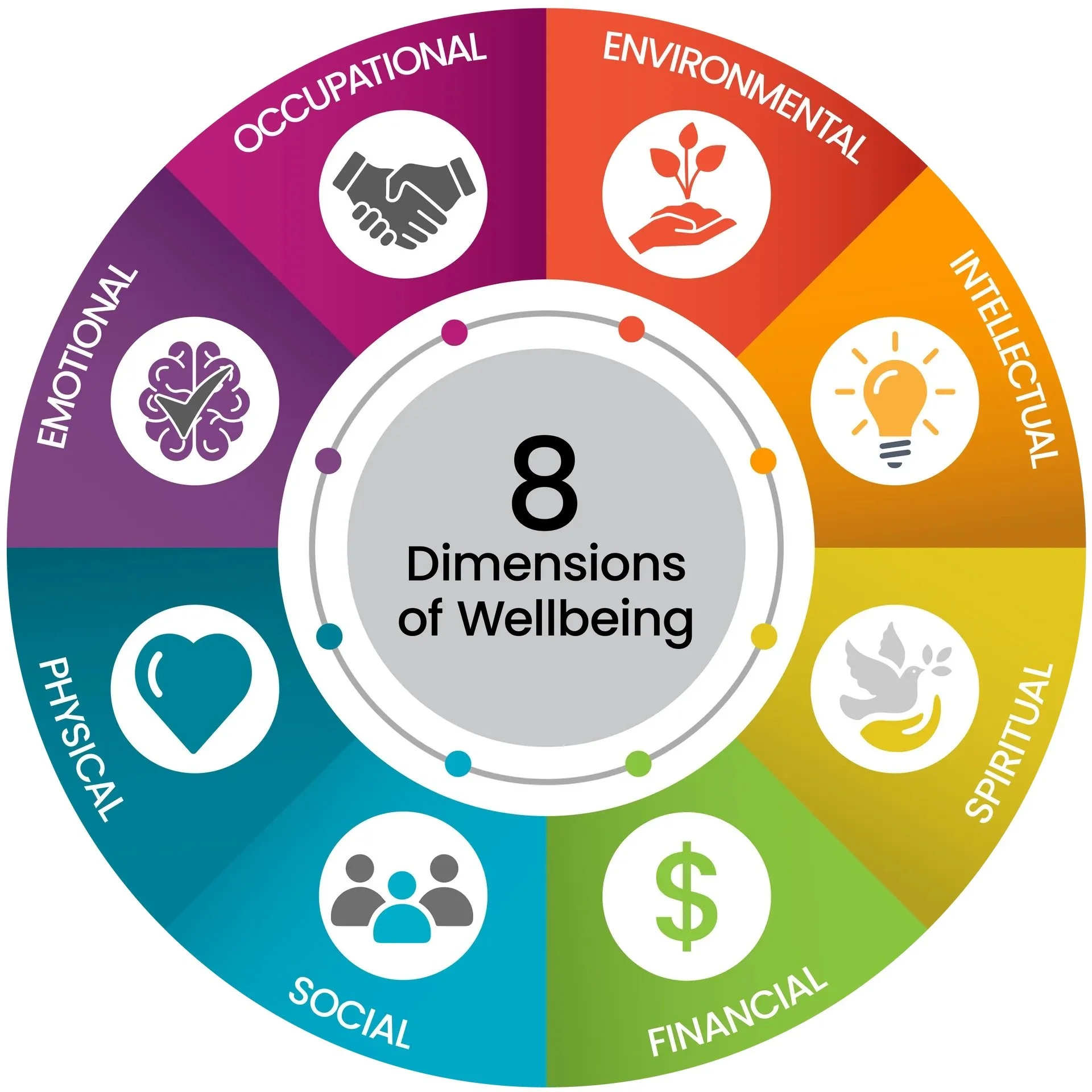
What Leaders Need to Know About the 8 Dimensions of Wellbeing
When we talk about employee health and performance, two words often come up: wellness and wellbeing.
They’re related—but they’re not the same.
Wellness focuses on daily habits like sleep, nutrition, and exercise. It’s personal, proactive, and often the focus of company initiatives like step challenges, healthy snacks in the break room, or offering gym memberships as part employee benefits packages.

Team Health Pulse-Check
When change hits (new tech, new priorities, new goals), teams can start rushing through the work and lose sight of what makes them great — their humanity.

The Future of Work is Human-Led, Tech-Accelerated
What if work didn’t feel like a grind?
What if your team could move fast and feel fully alive?
Let me paint you a picture of what that looks like.
A Day in the Life of a Human-Led, Tech-Accelerated Team

The Silent Culture Killer: When ‘Efficient’ Becomes Robotic
We all want our teams to be efficient.
But what happens when efficiency becomes robotic?
One of the patterns I’ve seen in organizations is this:
In the name of “getting things done,” teams stop asking questions.
They stop exploring new ideas.
They stop showing up fully alive.
I’ve seen it.
I’ve done it.

Increase Productivity Without Killing Culture (Here’s How)
Let’s talk about a productivity killer no one admits:
You get an Email. It’s long. Maybe vague. Maybe off-track.
You read it and feel… stuck.
So you say, “I’ll deal with that later.”
But later turns into never.

How to Lead Through Uncertainty (Without Burning Out Your Team)
Uncertainty isn’t going away.
And in today’s workplace, uncertainty doesn’t just show up in the market — it shows up in your meetings, in your messaging, in your team’s energy.
Here's what most leaders miss:
It’s not just the change that’s hard — it’s the emotional state it triggers.

Human or AI? Why That’s the Wrong Question
When people talk about AI in the workplace, it usually sounds like a choice:
Either we go all-in on AI and risk losing our soul...
Or we stay human and risk falling behind.

The Crossroads Facing Every Leader: Speed Up or Stay Human?
Have you ever felt like technology was pulling you faster than your team could breathe?
I have — and it changed the course of my career.
Early on, I worked on major technology transformation projects. The systems we were rolling out promised efficiency, consistency, and speed. But the real shift happened when we realized something critical:

CASE STUDY: Building Resilience and Emotional Awareness in an Aerospace Company
Challenge
An aerospace company experiencing high levels of organizational change, rapid growth, and significant turnover faced challenges in fostering resilience and effective team dynamics. Teams often struggled with storming stages (based on Tuckman’s model) and lacked clarity around vision and purpose following a reorganization.